Industry white paper
The Convenience Blind Spot
How 1 in 3 FMCG transactions escape your retail media strategy, and why the brands who close this gap first will own the next decade of impulse.
The most important untargeted audience in FMCG is one you already know exists.
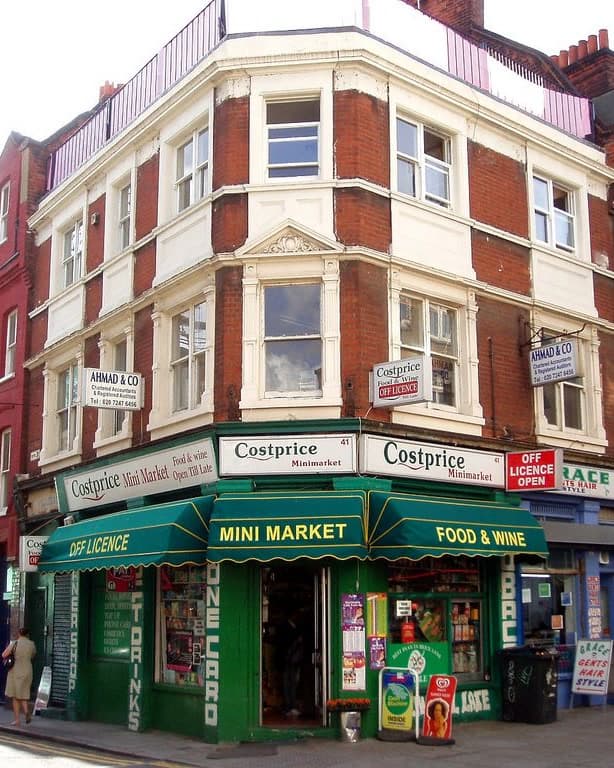
UK retail media has matured into a £3 billion channel growing at 22.7% year-on-year. FMCG brands have built sophisticated teams, integrated DSP pipes, and allocated meaningful budget to Tesco, Sainsbury's, and Amazon. And yet, every media plan in the industry shares the same structural flaw: it ignores the channel where roughly 1 in 3 FMCG transactions occur. The UK convenience and forecourt sector, 50,486 stores, £48.8 billion in annual sales (has no retail media network, no first-party data layer, and no closed-loop attribution infrastructure. The shopper who buys Lucozade at a Shell forecourt at 7am, the parent who grabs Walkers at a Spar on the school run, the commuter restocking Gillette at a BP Wild Bean Cafe)none of these transactions are measurable, targetable, or attributable by FMCG media teams today. This white paper quantifies the blind spot, identifies why it exists, and explains why solving it is the most consequential media infrastructure build of the next three years.
Retail media grew up in grocery. But grocery isn't where the whole sale happens.
The UK retail media story is, by most measures, a success. Retail media grew 22.7% year-on-year in 2024 (AA/WARC), outpacing every other major advertising channel. Search and retail media combined now account for two in every five pounds spent on UK advertising. Tesco's Clubcard loyalty programme counts 22 million active UK households. Sainsbury's, Asda, Ocado, and Morrisons have all built or licensed media network infrastructure. The DSP pipes are connected. The FMCG budgets are flowing.
The problem is structural. Every one of these networks was built by, and for, large-format grocery retail. They optimise for basket size, dwell time, and loyalty app engagement, all characteristics that favour the weekly supermarket shop. What they cannot optimise for is the channel that captures a different shopping mission entirely: immediacy, proximity, and impulse.
“We managed over half a billion in FMCG media spend. Around 30% of those sales happened in convenience stores, and we had absolutely nothing for it. No targeting, no measurement, no attribution. A complete black hole.”
The convenience channel in the UK is not a niche. According to the ACS Local Shop Report 2025, the sector comprises 50,486 stores with total forecast sales of £48.8 billion for 2025, growing to £53.7 billion by 2028. That is a channel larger than the entire UK cinema, radio, and print advertising industries combined, and it has zero first-party data monetisation infrastructure.
Why convenience has been locked out of retail media, until now.
The absence of retail media infrastructure in convenience is not an oversight. It is a product of structural barriers that have existed since the first retail media network launched. Understanding why the gap exists is the first step to understanding why it is now closeable, and why the window to move first is narrow.
Fragmentation at scale
50,486 stores operated by thousands of independent owners, symbol groups, and forecourt operators. No single data controller. No unified ePOS. Building a media network requires aggregating across this complexity, something the large RMNs were never incentivised to do.
No loyalty infrastructure
Supermarket RMNs are built on loyalty card data. The average independent convenience store has no loyalty programme, no app, and no mechanism for capturing shopper identity over time. Without identity, there is no audience. Without audience, there is no media.
ePOS data is siloed
Where transactional data does exist (in symbol group ePOS systems, in forecourt loyalty schemes) it sits in isolated systems with no standardisation, no identity resolution, and no DSP connectivity. Raw data is not an audience.
AI-native aggregation is now possible
Modern CDP technology, identity graph resolution, and ePOS API integrations mean the fragmentation barrier can finally be bridged without requiring each individual retailer to build their own stack. The infrastructure layer that was missing now exists.
The result of these compounded barriers is a channel that sells roughly 1 in 3 FMCG units in the UK while generating effectively zero first-party audience revenue. For FMCG brands, this creates a paradox: the mission-based, impulse-heavy convenience shopper is often the most valuable target for categories like soft drinks, snacks, confectionery, personal care, and energy, yet they are entirely invisible in retail media targeting.
“When a shopper buys a Red Bull at a forecourt on their commute, that transaction does not exist in any FMCG brand's retail media system. It cannot be attributed to prior ad exposure. It cannot trigger a retargeting sequence. It cannot feed into lifetime value modelling. The shopper walked in, bought, and disappeared, forever unmeasured.”
What the blind spot actually costs on a media plan.
The financial impact of the convenience blind spot compounds across three distinct dimensions: wasted spend, attribution failures, and competitive disadvantage. Each represents a quantifiable leak from FMCG media budgets, and each is solvable.
Wasted offsite spend. FMCG brands running offsite programmatic campaigns via Tesco, Sainsbury's, or Amazon DSPs reach audiences modelled on grocery shopper data. These campaigns follow users across the open web and connected TV. But when those users convert at a convenience store (which happens at a rate of roughly 1 in 3 for many impulse categories) the conversion is invisible. The attribution window closes. The media investment looks less efficient than it actually is, and budget gets reallocated accordingly. Convenience is being penalised for lacking measurement infrastructure, not for lacking sales.
Loyalty programme leakage. The ACS reports that ~£49.4 billion in annual convenience sales are largely untracked at a shopper level. For FMCG brands investing in retail media to drive loyalty uplift, this represents a systematic failure to measure one-third of their volume. The shopper who is "loyal to Walkers" according to their Tesco data may be buying Walkers even more frequently at their local Spar, a behaviour that is simply invisible.
Competitive price discovery. Because convenience transaction data is not monetised, FMCG brands have no visibility into pricing dynamics, out-of-stock rates, or promotional compliance in the convenience channel. Large RMN partners like Tesco and Ocado provide detailed sales insight as part of their media offering. The convenience channel provides nothing, leaving brands to rely on expensive, slow, and incomplete third-party audit data.
Retail Media Network Coverage, UK FMCG (Estimated)
Adtelligent 2026, IAB UK, Corner Collective analysis
The US already solved this. The UK is three years behind.
The convenience retail media gap is not a uniquely British problem, but the UK's solution is arriving later than in comparable markets. In January 2026, Inmar Intelligence launched manufacturer-funded digital coupons inside bp's Earnify loyalty app across 8,500+ US fuel and convenience locations, in partnership with retail media network Axonet. The model: Axonet aggregated the retailer network and data layer; Inmar provided coupon creation, clearing, and settlement. Neither could have built it alone.
In Australia, 7-Eleven's retail media network launched in 2023 and was profitable within 18 months, demonstrating that convenience RMN economics are viable at scale. In France, Total Energies partnered with a data clean room to monetise forecourt loyalty data across 3,000+ stations in 2024. The infrastructure pattern is consistent across markets: aggregate the fragmented data, apply identity resolution, connect to existing DSP infrastructure, and sell to the FMCG brands who already want to reach this audience.
| Capability | Major Grocery RMNs | Convenience (UK Today) | Convenience (CC Platform) |
|---|---|---|---|
| First-party shopper identity | Yes | No | Yes |
| Offsite programmatic targeting | Yes | No | Yes (TTD, DV360, Yahoo DSP) |
| Onsite media placements | Yes | Screens only, untargeted | Yes, data-enriched |
| Closed-loop attribution | Yes | No | Yes |
| AI consumption intelligence | No | No | Yes (patent pending) |
| DRS return-loop data | No | No | Yes (unique to CC) |
| Digital coupon clearing | Yes (grocery only) | No | Yes (via Savi partnership) |
The table above illustrates the gap that UK FMCG brands are currently navigating: grocery RMNs offer sophisticated targeting, but only for the 70% of FMCG volume they capture. The remaining 30% (the convenience and forecourt channel) is a structurally dark channel with no equivalent infrastructure. Until now.
What a convenience RMN actually delivers to FMCG media plans.
The strategic opportunity for FMCG brands is not simply "more inventory." The convenience channel offers a fundamentally different targeting signal, one that grocery RMNs cannot replicate because they do not serve the same shopping mission.
Impulse & mission-based intent
Convenience shoppers are in an active consumption or replenishment mission. They are not browsing, they have a specific need, often within the next 30 minutes. This intent signal is more precise than the planned grocery mission and commands premium CPMs in any developed RMN market.
High-frequency, incremental reach
Convenience shoppers visit 3-5x per week on average. This high-frequency touchpoint creates audience overlap with grocery RMN targets, but also captures heavy category users who split-shop, a segment largely invisible to grocery-only RMNs.
Younger, urban demographic
Millennials and Gen Z are the most frequent convenience shoppers in the UK (Statista). These are the audiences FMCG brands pay the highest CPMs to reach on social media, yet they walk into a convenience store multiple times a week without generating any targetable data signal.
AI consumption intelligence (unique)
Corner Collective's depletion prediction AI learns individual replenishment cycles, predicting when a shopper will run out of a specific SKU. Intercept at the moment of need, not retrospectively. No other UK RMN (grocery or otherwise) has this capability today.
Beyond targeting, the financial case for a convenience RMN is compelling at the retailer level. Retail media is the highest-margin revenue line in retail, 70-90% gross margins for onsite placements, 20-40% for offsite (BCG). For independent convenience operators and symbol groups facing rising costs and margin compression, a media revenue stream represents structural relief that product margin alone cannot provide. The incentive alignment between brands (who need the audience) and retailers (who need the revenue) has never been stronger.
“The average UK convenience store operates at a 4.3% net margin (IBISWorld). A media revenue stream at 70-90% gross margin would represent a transformational uplift on that base, adding revenue that requires no additional footfall, no extra cost of goods, and no capital investment from the retailer.”
The infrastructure that closes the convenience blind spot.
Corner Collective is the UK's first AI-native retail media infrastructure platform purpose-built for convenience, forecourt, and symbol group retail. We are the CDP, identity graph, and media sales layer for data holders who lack the infrastructure to monetise what they have, and the DSP bridge that connects this untapped audience to the FMCG brands already trying to reach it.
AI CDP & Identity Graph
Resolves individual shoppers across ePOS, loyalty, and receipt data. Builds purchase histories. Predicts replenishment. Segments audiences in real time.
Offsite Programmatic
Activates convenience audiences across The Trade Desk, DV360, and Yahoo DSP. Closed-loop attribution back to in-store purchase. No cookie dependency.
AI Consumption Intelligence
Patent-pending depletion prediction engine. DRS confirms consumption at SKU level, the only RMN in the UK with true consumption data. Intercept at the replenishment moment.
Closed-Loop Attribution
Every impression tied to a purchase. iROAS measurement using the same methodology as Tesco Media and Ocado Advertising. Comparable benchmarks for budget allocation.
The infrastructure that closes the convenience blind spot.
Corner Collective is the UK's first AI-native retail media infrastructure platform purpose-built for convenience, forecourt, and symbol group retail.
Request a briefingGet in touch
Want to Learn More?
Get in touch with our team to discuss how Corner Collective can transform your retail media strategy.